Care Planning
How to Write a Person-Centred Care Note
A practical guide to writing clear, respectful and useful person-centred care notes that record what happened, what mattered to the person and what needs to happen next.
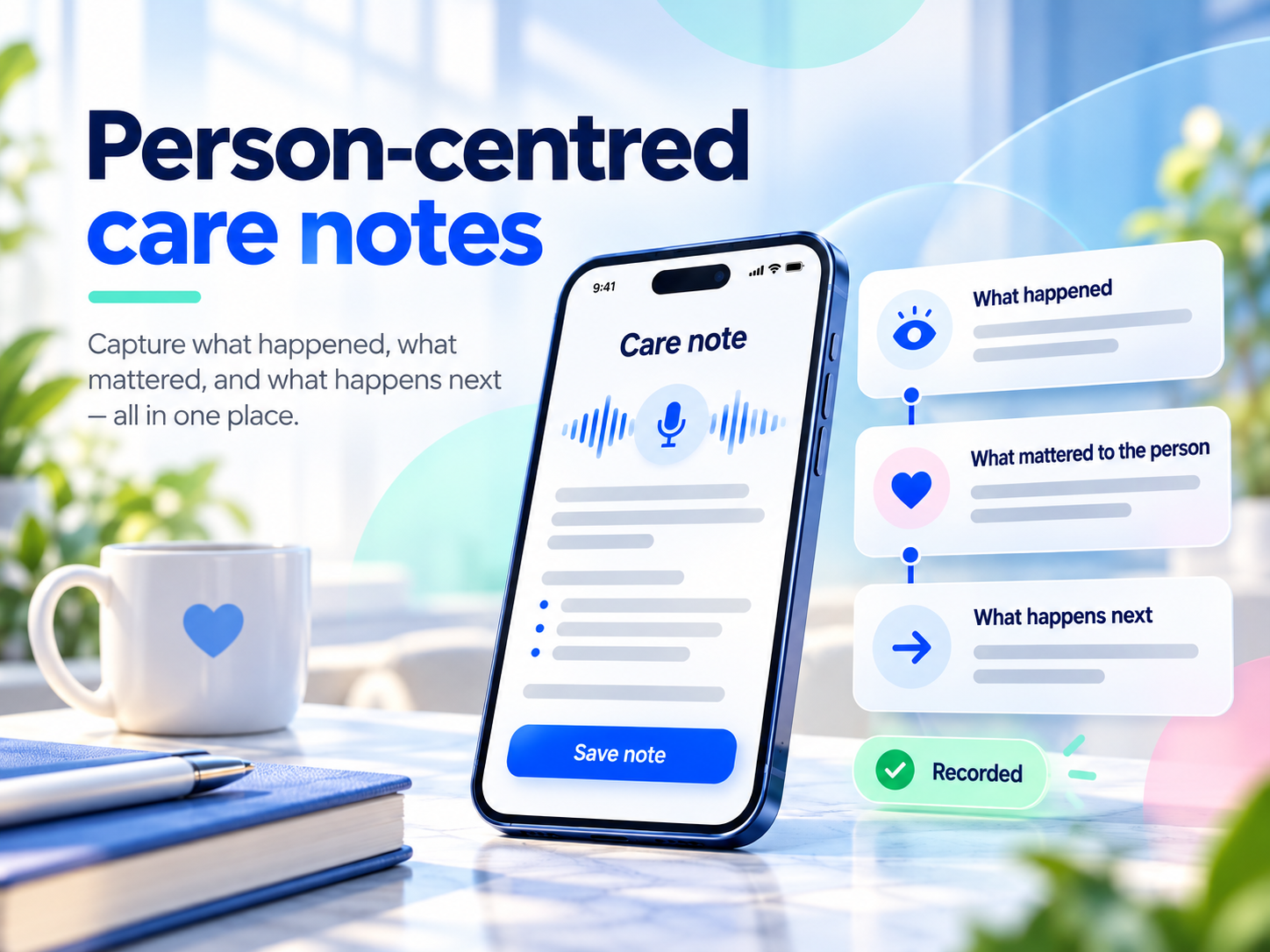
A good care note should tell the story of the visit clearly enough that another member of the team can understand what happened, how the person was, what choices they made and whether anything needs to be followed up.
Person-centred care notes go further than recording tasks. They show the individual behind the task list and help create continuity between one visit and the next.
Start with the person, not the checklist
A note such as "personal care completed, breakfast made, medication given" may confirm that tasks were done, but it gives very little information about the person's experience, choices or condition.
A stronger note records what support was offered, what the person chose, what they were able to do independently, any relevant observation and the outcome of the visit.
Use respectful, factual language
Care notes should be objective and professional. Avoid labels, assumptions and judgemental language. Record what you observed, what the person said and what action you took.
For example, instead of writing "Mary was difficult and refused breakfast", a more useful note might say: "Mary said she did not want breakfast and preferred tea only this morning. I offered toast and cereal, which she declined. She said she felt slightly nauseous but had no pain. I informed the office in line with the care plan and recorded the reduced food intake."
Include the person's choices and preferences
Person-centred care is based on involvement and choice. Where relevant, record what the person wanted, how they preferred support to be delivered and any change from their usual routine.
This might include clothing choice, food preference, the order of tasks, whether they wanted assistance or preferred to complete something independently, or how they wanted family involved.
Record what the person did for themselves
Care notes should not unintentionally make people sound more dependent than they are. If the person washed their face independently, chose their clothes, prepared part of their meal or managed part of their medication routine, record that.
This helps show strengths, independence and progress towards outcomes rather than only recording what staff did.
Describe relevant changes
The care note is an important source of information about change. Record anything relevant that was different from normal - appetite, mobility, mood, skin condition, pain, breathing, continence, confusion, medication, sleep or other areas identified in the care plan.
Avoid diagnosing. Record the observation and follow the organisation's escalation process where required.
Record action and escalation
If something required follow-up, the note should make clear what you did. For example: who was informed, whether an incident or body map was completed, whether a supervisor was contacted, whether the family was informed with consent, or whether medical advice was sought.
A useful care note answers five questions: What happened? What did the person choose? What did you observe? What did you do? What needs to happen next?
Keep notes clear and proportionate
More words do not always mean a better note. The aim is a concise record that is specific enough to be useful. Avoid copying the same sentence every visit unless it genuinely reflects what happened. Repetitive notes can hide meaningful change.
Write the note as close to the visit as possible
Documentation is generally more accurate when completed at the point of care or immediately afterwards. Mobile care applications can reduce the delay between the visit and the record and can also allow structured charts, observations, tasks and care notes to be captured in one workflow.
Example of a person-centred care note
"John was in the lounge when I arrived and greeted me. He said he had slept well and wanted to shower before breakfast. John selected his clothes and washed his face and upper body independently; I supported him with his lower legs and back as agreed in his care plan. His skin was intact with no new redness observed. John chose porridge with banana and ate most of it, with one mug of tea. Morning medication was supported as recorded on the MAR. John said his right knee felt more stiff than usual when standing but rated the discomfort as mild. He mobilised with his frame as usual. I updated the office because this was a change from his usual presentation. John was settled in the lounge with his call pendant before I left."
Digital care notes can improve continuity
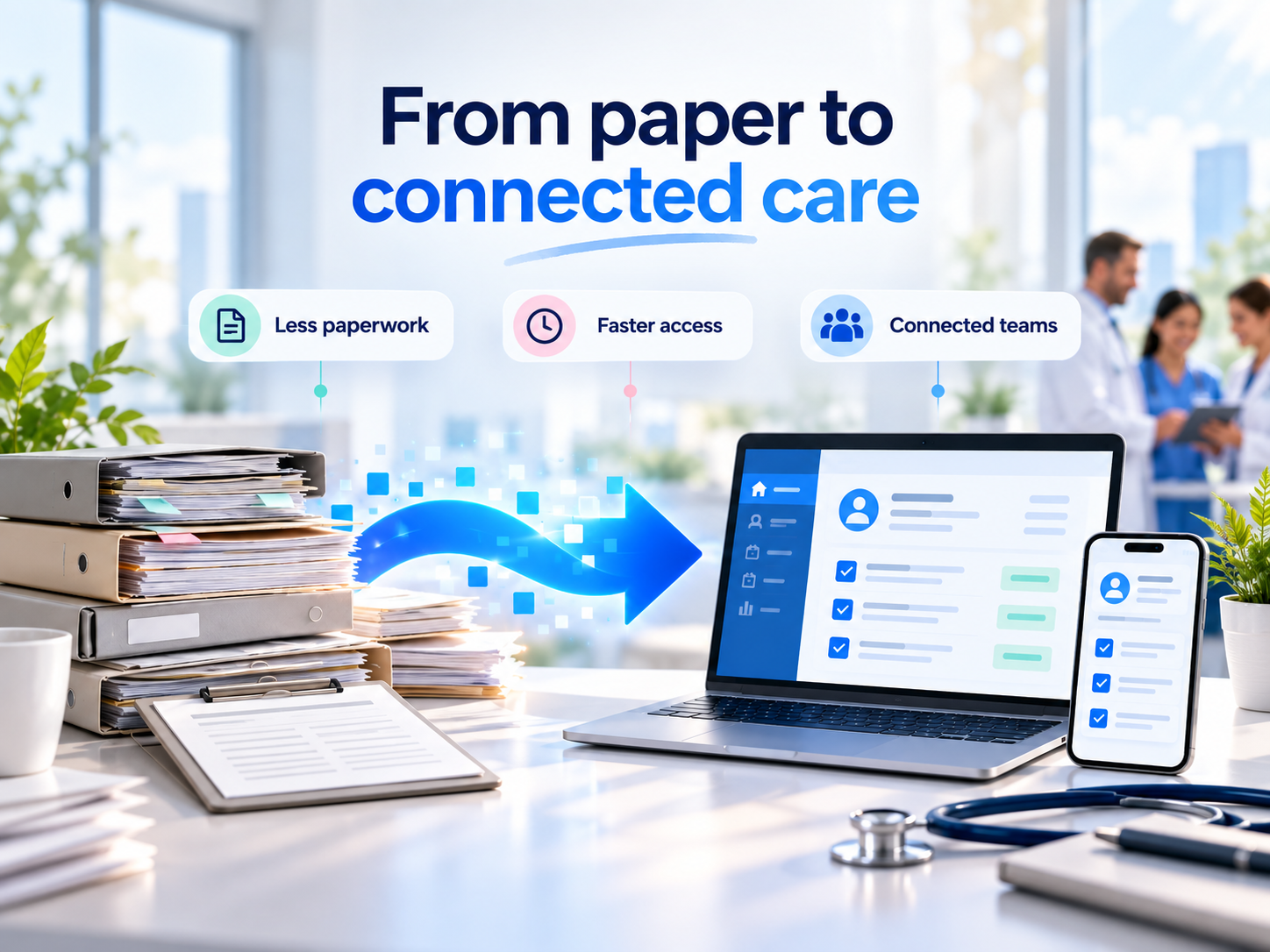
When care notes are recorded in the same system as the person's care plan, medication record, charts, incidents and visit history, the information becomes easier to review. Supervisors can spot changes across several visits, office teams can follow up concerns and audits can be completed without collecting separate paper records.
How careVITALS supports care notes
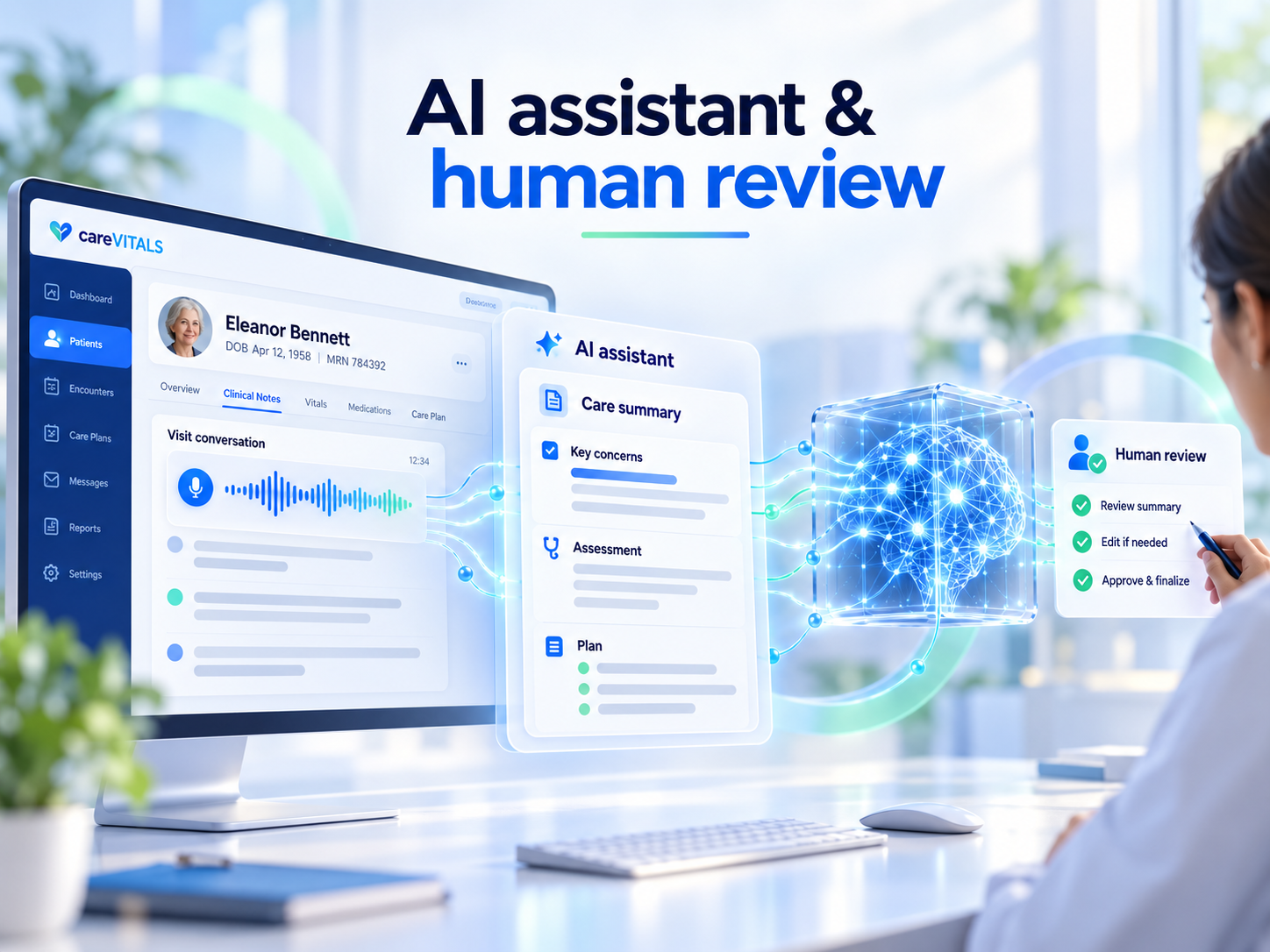
The careVITALS mobile application is designed to help frontline teams record care at the point of delivery, with access to care plans, tasks, charts, medication information, observations and other relevant records. AI-supported tools can also help reduce administration while keeping staff responsible for the final record and professional judgement.
Other Insights
Book a Free Demonstration
Want to make frontline documentation easier and more consistent? Book a careVITALS demonstration.