Care Planning
What Do You Need in a Person-Centred Care Plan?
A practical checklist for creating care plans that reflect the person’s preferences, strengths, risks, outcomes, communication needs and day-to-day support.
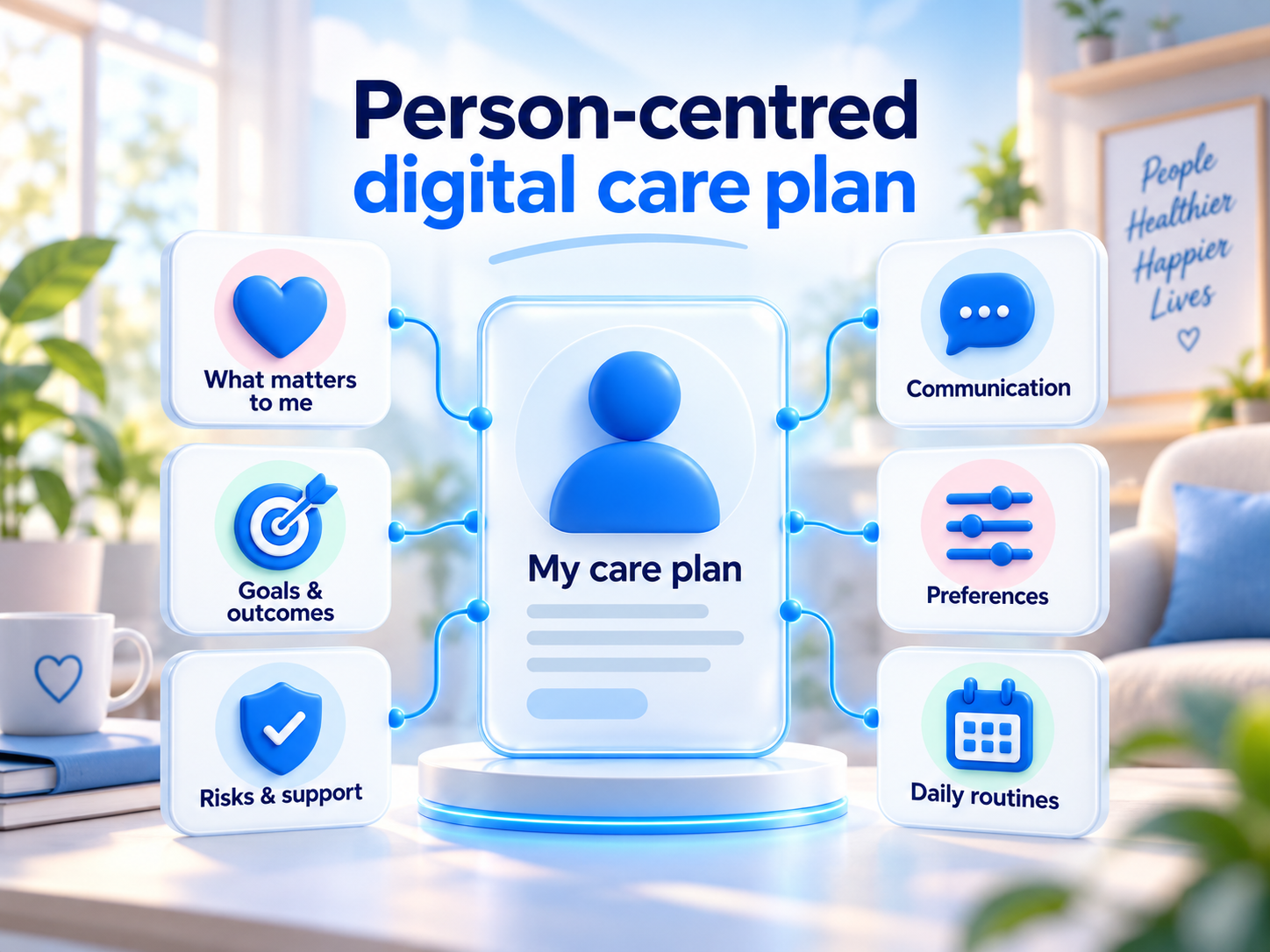
A person-centred care plan should be more than a list of tasks. It should help everybody involved understand who the person is, what matters to them, what they want to achieve, what support they need and how that support should be delivered.
CQC Regulation 9 requires care and treatment to be appropriate, meet needs and reflect preferences. CQC guidance also expects a clear plan with agreed goals, involvement and review. NICE and NHS personalised care guidance similarly emphasise outcomes, independence, strengths and what matters to the person.
Start with "what matters to me"
The plan should begin with the person rather than their diagnosis or package of care. Record the people, routines, beliefs, interests, relationships and priorities that matter to them. Include how they like to spend their day and anything that helps them feel safe, comfortable and in control.
Record how the person communicates
Communication needs should be easy to find. Include preferred language, hearing or visual needs, communication aids, processing time, non-verbal cues and how staff should present choices or information.
Where the Accessible Information Standard or other communication requirements are relevant, the plan should make the practical adjustments clear to frontline staff.
Identify strengths and independence
A person-centred plan should describe what the person can do as well as where they need support. This prevents care from becoming unnecessarily task-led or dependency-focused.
For each area of support, consider what the person wants to do independently, what they can do with prompting and where direct assistance is required.
Agree meaningful outcomes
Outcomes should be meaningful to the person. "Support with meals" is a task. "Maintain weight and continue choosing and preparing simple meals with support" is closer to an outcome.
Good outcomes help staff understand the purpose of the support and make reviews more meaningful.
Describe exactly how support should be delivered
The plan should be clear enough that a new, competent member of staff can understand what good support looks like. Record preferences, sequencing, prompts, equipment, privacy requirements, manual handling arrangements and any specific instructions.
Avoid vague phrases such as "assist as required" where more detail is needed for safe and consistent care.
Include risks without removing choice
Risk management should support people to live the life they choose, not remove every possible risk. Record the relevant risk, the person's views, agreed controls and what staff should do if circumstances change.
Where mental capacity is relevant, ensure assessments, best-interest decisions or other legal processes are recorded appropriately and reviewed when needed.
Cover health, medication and escalation
Relevant health conditions, allergies, medication arrangements, observations, symptoms to monitor and escalation instructions should be accessible. Staff need to know what is normal for the person and what changes require action.
For complex care, this may include clinical protocols, equipment, nutrition, continence, respiratory support, seizure management or other specialist areas, depending on the person's needs and the competence required.
Include emotional, social and cultural needs
Care planning should consider the whole person. Include important relationships, emotional wellbeing, faith, culture, sexuality, identity, community involvement, hobbies, social routines and any other areas the person identifies as important.
Make roles and responsibilities clear
Where family members, advocates, professionals or other services are involved, the plan should explain the agreed role of each party. This is particularly important when responsibilities could otherwise be assumed or duplicated.
Set review dates and respond to change
A care plan is a living document. It should have an agreed review date and should also be reviewed when there is a meaningful change in needs, risk, medication, capacity, circumstances or the person's preferences.
A strong care plan helps a care worker answer three questions quickly: Who is this person? What matters to them? How should I support them safely and in the way they prefer?
Use digital care planning to keep the plan connected
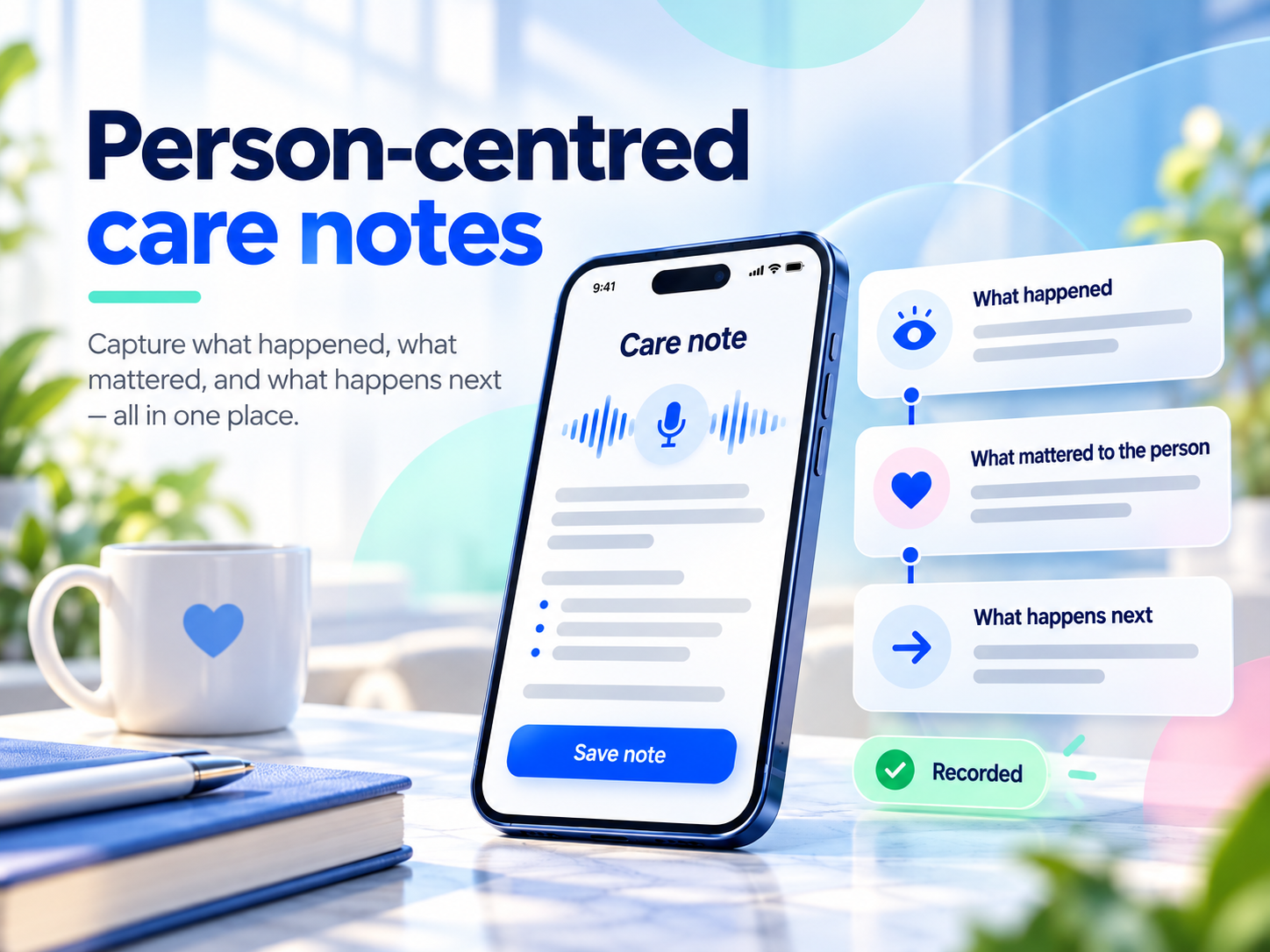
Digital care planning can make reviews and updates easier to control. Structured assessments, version history, alerts, mobile access and links to care notes can help the plan remain connected to day-to-day delivery rather than sitting in a separate folder.
Data from care notes, charts, incidents and medication records can also help managers identify when the plan may need to be reviewed.
How careVITALS supports person-centred planning
careVITALS provides digital care planning, configurable forms and assessments, mobile access, outcome-focused information, care notes, charts, medication management, risk records and review tools within one platform. The aim is to give staff the information they need while keeping the person and their preferences at the centre of the record.
Other Insights


Book a Free Demonstration
Want to modernise your care planning process? Book a careVITALS demonstration and see how digital care planning can work across your service.